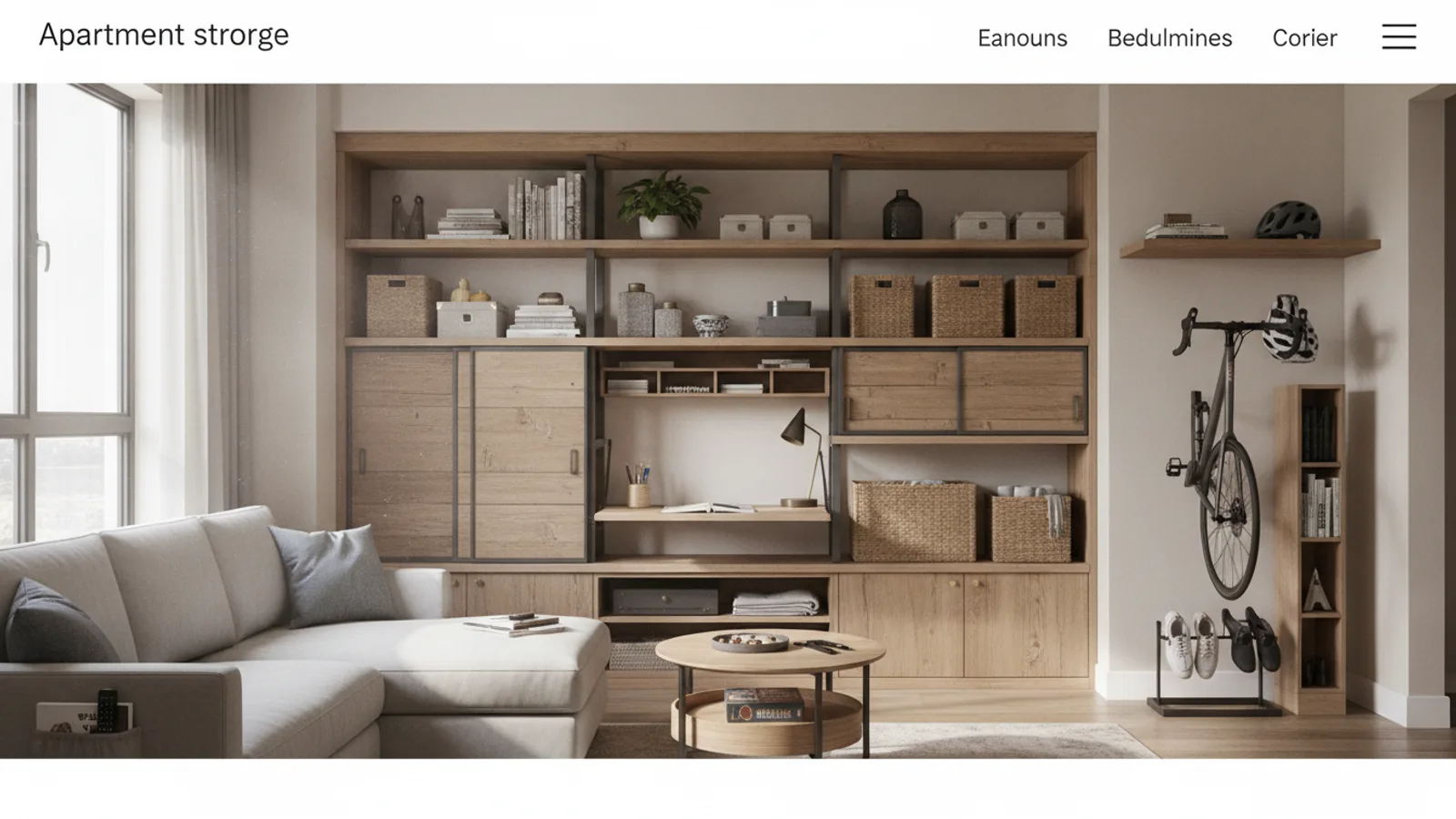
Small House Storage Ideas
A practical step-by-step guide to small house storage ideas, including preparation, instructions, common issues, tips, and next steps.

Small House Storage Ideas
Living in a small house means every square inch counts. This guide will show you how to cleverly organise, declutter, and utilise hidden spaces to make your home feel bigger and more comfortable. By following these practical steps, you can transform cramped areas into functional, stress-free zones, helping you keep your belongings tidy and your living space optimised for everyday life.
Fast Answer
- First action: Declutter regularly
- Key strategy: Maximise vertical space
- Furniture choice: Opt for multi-functional items
- Maintenance: Implement the "one in, one out" rule
Before You Start
- Gather strong rubbish bags and boxes for items to donate or recycle.
- Have a measuring tape, pen, and notebook ready for planning.
- Prepare basic cleaning supplies to wipe down spaces as you clear them.
- Mentally prepare to be decisive about what you truly need and use.
- Set realistic goals; you don't need to tackle the whole house in one go.
Step-by-Step Instructions
1. Begin with a Thorough Declutter
The most important first step to better storage in a small house is to get rid of items you no longer need, use, or love. Start room by room, or even by a specific area within a room, to avoid feeling overwhelmed. Take everything out of a cupboard or drawer, then sort items into three piles: Keep, Donate/Sell, and Bin.
Be honest with yourself about each item. If you haven't used it in a year, or if it doesn't bring you joy, consider letting it go. This process will free up significant space and make all subsequent storage efforts much more effective.
2. Maximise Vertical Space with Shelving and Tall Units
In a small house, the walls are your best friend for storage. Look up! Instead of spreading items out across surfaces, think about how you can stack them. Install shelves right up to the ceiling in living rooms, kitchens, and bedrooms. Floating shelves can add a minimalist touch, while built-in or tall, narrow bookcases make the most of wall space.
In cupboards, use shelf risers or stackable containers to create extra levels. Over-door organisers are fantastic for items like shoes, cleaning supplies, or toiletries, utilising space that often goes unnoticed.
3. Invest in Multi-functional Furniture
Every piece of furniture in a small home should earn its place. Choose items that serve more than one purpose. An ottoman with hidden storage is perfect for blankets or magazines and can double as extra seating. A bed frame with built-in drawers underneath eliminates the need for bulky chest of drawers.
Nesting tables can be pulled out for guests and tucked away neatly when not in use. A console table can serve as a desk, a dining surface, or an entryway organiser. Look for coffee tables with lift-tops that reveal storage or offer a comfortable work surface.
4. Utilise Under-Used and Awkward Spaces
Small homes often have nooks and crannies that can become valuable storage spots. Think about the space under your bed – drawers or flat storage boxes on wheels can neatly hold seasonal clothes, extra bedding, or shoes. The space above kitchen cupboards can be used for less frequently used items, like special occasion dishes.
Awkward corners can be fitted with corner shelving units or a slim cabinet. The back of cupboard doors can hold small racks for spices, cleaning products, or accessories. Even the space under staircases can be transformed with custom pull-out drawers or a small cupboard.
5. Implement Zoning and Smart Organisation
Even in open-plan living, creating distinct zones helps keep a small house tidy. Designate specific areas for different activities – a reading corner, a dining area, a workspace. This helps you keep items related to that activity contained within its zone, preventing clutter from spreading.
Within these zones, use smart organisers: drawer dividers for cutlery or office supplies, clear bins for pantry items, stackable boxes for toys. Labels are essential for quick retrieval and ensuring everything returns to its designated spot. Vertical file organisers can tidy paperwork or chopping boards in the kitchen.
6. Maintain Order with the "One In, One Out" Rule
Once you've organised your small house, the key is to maintain it. The "one in, one out" rule is simple but highly effective: whenever you bring a new item into your home, especially in categories like clothing, books, or kitchen gadgets, you must remove an old item in that same category. This prevents clutter from building up again.
Make a habit of a quick daily tidy-up, putting things back in their place. Schedule a more thorough weekly or monthly decluttering session for bigger items or areas that tend to accumulate things. Consistency is vital for long-term success in small house storage.
Quick Reference
| Situation | Use this | Why |
|---|---|---|
| Too many clothes, not enough wardrobe space | Vacuum storage bags, under-bed drawers, seasonal rotation | Compresses bulky items, uses often-wasted space, reduces clutter by only storing current season's clothes |
| Messy kitchen counters | Wall-mounted magnetic knife strips, vertical pan organisers, clear pantry containers | Frees up counter space, organises items neatly, allows for easy visibility and access |
| Piles of books or paperwork | Tall, narrow bookshelves, floating shelves, digital document storage | Utilises vertical wall space, keeps surfaces clear, reduces physical paper clutter |
| Kids' toys overflowing | Storage ottomans, labelled bins/baskets, toy rotation | Provides hidden storage, encourages easy tidying, keeps play areas clear |
| Limited bathroom space | Over-toilet storage unit, shower caddies, mirror cabinets | Utilises vertical space above toilet, keeps essentials organised and off surfaces |
Common Problems When You Implement Small House Storage Ideas
Even with the best intentions, you might face challenges when trying to optimise storage in a small home. Knowing these common issues and their solutions can help you stay on track.
-
Feeling Overwhelmed by Decluttering: It's common to feel swamped when faced with years of accumulated items.
Fix: Break it down. Instead of tackling a whole room, focus on one drawer, one shelf, or one category (e.g., all your socks) at a time. Set a timer for 15-20 minutes and stop when it goes off. Small, consistent efforts add up.
-
Buying Storage Solutions Before Decluttering: This is a common mistake that can lead to more clutter. You end up with empty storage boxes or systems that don't fit what you actually need to store.
Fix: Always complete the decluttering process first. Once you know exactly what items you're keeping, you can accurately measure and choose storage solutions that perfectly fit your belongings and your space.
-
Not Using Vertical Space Effectively: People often forget to look up, leaving valuable wall space unused.
Fix: Walk through each room specifically looking at walls from floor to ceiling. Identify areas where shelves, wall-mounted cabinets, pegboards, or hanging organisers could be added. Use a measuring tape to ensure you choose items that fit precisely.
-
Storage Solutions Look Messy: Sometimes, even organised spaces can look cluttered if the storage items themselves are chaotic or mismatched.
Fix: Opt for consistent colours and styles for your storage bins, baskets, and boxes. Use opaque containers for items you don't want on display and clear ones for things you need to see. Label everything clearly and neatly to give a polished look.
-
Sentimental Items are Hard to Let Go Of: Emotional attachments can make decluttering very difficult.
Fix: Designate a small, specific "memory box" or container for genuinely sentimental items. Only keep what fits in this box. For other sentimental items, consider taking a photo of them and creating a digital memory album, then letting the physical item go.
Advanced Tips for Small House Storage Ideas
Once you've mastered the basics, these advanced strategies can take your small house storage to the next level, making your home even more efficient and visually appealing.
-
Embrace Invisible Storage: Think beyond traditional shelves and cupboards. Can you install pull-out drawers in kitchen kickboards? What about recessed shelves built into wall cavities or behind a full-length mirror? These hidden spaces keep clutter out of sight and maintain clean lines.
Consider a false wall or a room divider that incorporates shelves or cupboards, blending storage seamlessly into the architecture of your home.
-
Digitise and Declutter Paperwork: Paper can quickly overwhelm a small space. Scan important documents, photos, and manuals to create digital copies. Use cloud storage services to keep them safe and accessible.
Once digitised, shred or safely dispose of the physical copies. This dramatically reduces the need for filing cabinets and paper piles, freeing up valuable surface and drawer space.
-
Create a Command Centre: Designate a small, central area – perhaps in the kitchen or entryway – as a command centre. This can be a wall-mounted organiser with a calendar, a whiteboard, hooks for keys, and a charging station for devices.
Having one organised spot for daily essentials prevents them from scattering across various surfaces and helps maintain overall tidiness.
-
Consider Portable Storage and Furniture: For items you don't need all the time, think about portable storage that can be easily moved or stored away. Foldable tables or chairs, rolling carts for craft supplies, or a mobile kitchen island can be highly versatile in a small space.
When not in use, these items can be collapsed, tucked into a corner, or even stored in a shed or communal area if available, giving you maximum flexibility.
-
Optimise Wardrobe Space with Smart Accessories: Beyond basic hangers, invest in wardrobe accessories that maximise every inch. Slimline hangers free up rail space. Drawer dividers for socks and underwear keep things tidy. Hanging shoe organisers or multi-tier skirt/trouser hangers can double or triple your storage capacity.
Fold clothes using methods like the KonMari vertical fold, which saves space and makes items easier to see and access without rummaging.
Small House Storage Ideas FAQ
Here are answers to some common questions about managing storage in a compact home.
Q: How often should I declutter my small house?
A: For small homes, it's beneficial to have a routine. A quick tidy-up daily helps, but a more thorough decluttering session every 3-6 months (seasonally) is ideal. This helps prevent new clutter from accumulating and ensures your systems remain effective. For highly visible or high-traffic areas, monthly spot checks can be very effective.
Q: Are open shelves a good idea in a small house?
A: Open shelves can be great for visual lightness and displaying curated items, which can make a small space feel less cramped. However, they only work if the items on them are kept perfectly tidy, attractive, and dust-free. If open shelves tend to become cluttered or collect dust easily, closed storage (like cabinets with doors) might be a better option to maintain a clean aesthetic.
Q: What's the best way to store seasonal items like winter coats or Christmas decorations?
A: For seasonal items, vacuum storage bags are excellent as they significantly compress bulky items like coats, duvets, and jumpers, saving a lot of space. Store these bags in under-bed drawers, the top of wardrobes, or in a loft space if accessible. Christmas decorations can be organised in clearly labelled, lidded plastic tubs that stack neatly, placed in a garage, shed, or dedicated cupboard.
Q: How do I deal with large, awkward items like sports equipment or musical instruments?
A: For large items, consider wall-mounted hooks or racks for bikes, skis, or guitars. These utilise vertical space that might otherwise be unused. If you have a shed, garage, or even communal storage in your building, these are often the best places for such items. If not, look for multi-functional storage benches or ottomans that can cleverly hide smaller pieces of equipment.
Q: Should I get rid of things I might need "just in case"?
A: In a small house, the "just in case" mentality is a major obstacle to effective storage. Be very selective. If an item is easily replaceable, inexpensive, or rarely used, it might be better to let it go. You can always borrow, rent, or buy a new one if the need genuinely arises. Prioritise keeping items you use regularly and those that are truly irreplaceable or costly to replace.
Final Checklist for Small House Storage Ideas
Before you consider your small house storage efforts complete, run through this final checklist to ensure you've covered all the key areas and set yourself up for long-term success.
- Did you thoroughly declutter before investing in any new storage solutions?
- Have you assessed and utilised all available vertical space (walls, top of cabinets)?
- Are you using multi-functional furniture wherever possible to save space?
- Have you identified and utilised under-used or awkward spaces in each room?
- Are your living areas zoned, and are items contained within their respective zones?
- Are you using appropriate organisers (drawer dividers, clear bins) for smaller items?
- Have you implemented the "one in, one out" rule to prevent future clutter?
- Is your storage aesthetically pleasing, using consistent containers or labels?
- Are frequently used items easily accessible, and less-used items stored out of the way?
- Do you have a plan for regular maintenance and decluttering to keep things tidy?
What should I check before acting on advice about small house storage ideas?
Use this guide as a starting point, compare current specifications and costs, and check the details that apply to your own situation before making a purchase or booking.
Where can I find related architecture-design guidance?
Browse the related guides in this section for practical comparisons, planning notes, and next steps that support the same decision.