Boutique Hotel Design Ideas
A practical step-by-step guide to boutique hotel design ideas, including preparation, instructions, common issues, tips, and next steps.
Boutique Hotel Design Ideas
This guide provides practical steps for developing and executing boutique hotel design ideas. Boutique hotels stand out by offering a unique, character-driven experience rather than a generic stay. Whether you're an aspiring hotelier, an interior designer, or a homeowner wanting to create a guest suite with personality, this guide will walk you through the process of defining a theme, selecting materials, and adding the memorable details that create a truly special space.
Fast Answer
- Define a Core Story: Base your design on a unique theme, like local history or a specific art style, to create a cohesive and memorable experience.
- Prioritise Local Artistry: Incorporate work from local artists and craftspeople to add authenticity and connect the space to its location.
- Invest in "Hero" Pieces: Use statement furniture, lighting, or art as focal points to give each room a "wow" factor.
- Focus on Sensory Details: Go beyond visuals by considering textures, scents, and sounds to build a complete and immersive atmosphere.
Before You Start
- A Clear Concept: A one-page document outlining your unique theme, target guest, and desired atmosphere.
- Inspiration Board: A physical or digital (like Pinterest) collection of images, colours, and textures that capture your vision.
- Detailed Floor Plan: An accurate, to-scale drawing of the space you are designing.
- Budget Spreadsheet: A detailed plan for all expected costs, from furniture and paint to contractor fees.
- Material Samples: A collection of fabric swatches, paint chips, flooring samples, and tile options to test in the actual space.
- List of Local Suppliers: Research and compile contact details for local artists, furniture makers, and antique shops.
Step-by-Step Instructions
Define Your Unique Story or Theme
The heart of any boutique hotel is its story. This is the foundation upon which every other decision rests. A strong theme prevents the design from feeling random or generic. Instead of choosing a vague concept like "modern luxury," get specific. Is your story rooted in the building's industrial past? Does it celebrate a local legend, a historical event, or the natural landscape surrounding the property?
Brainstorm ideas that are authentic to the location or the building itself. For example, a hotel in a former textile mill could feature textures, patterns, and colours inspired by that history. A coastal property might draw from maritime maps, weathered woods, and the colours of the sea and sky. Write this story down. It should be a clear, compelling narrative that you can refer back to when making decisions about colours, furniture, and art. This narrative ensures every element has a purpose and contributes to a cohesive experience for the guest.
Develop a Cohesive Colour and Material Palette
With your story defined, translate it into a tangible palette of colours, textures, and materials. This is where your inspiration board becomes a critical tool. Gather samples of everything: paint chips, fabric swatches, wood finishes, metal hardware, and tile. Look at them together in the natural light of the space you're designing.
Aim for a balanced palette. A good starting point is the 60-30-10 rule. 60% of your space (like the walls) should be a dominant, neutral colour. 30% should be a secondary colour (found in furniture, curtains, or a feature wall). The final 10% is your accent colour, used sparingly in cushions, art, or small accessories to add a pop of interest. Your materials should also tell your story. Rough-hewn wood and blackened steel might suit an industrial theme, while velvet, brass, and marble would support an art deco concept. Consistency in this palette is key to making the design feel intentional and professionally executed.
Design the Room Layout for Experience
Standard hotel rooms are often designed purely for function. Boutique hotels design for experience. Think about how a guest will move through and interact with the space. Instead of pushing all the furniture against the walls, consider creating distinct zones for different activities, even in a small room.
For example, create a comfortable reading nook with a unique armchair, a small side table, and dedicated lighting. Position the desk to face a window rather than a blank wall. Think about the "path" from the bed to the bathroom. Is it clear and easy to navigate in the dark? Consider unconventional furniture placement. Can the bed be placed in the centre of the room with a beautiful screen or low shelving as a headboard? The goal is to make the layout feel thoughtful, intuitive, and a little bit surprising.
Select a "Hero" Piece for Each Room
Every room needs a star. This "hero" or statement piece is the main focal point that immediately captures a guest's attention and sets the tone. It's often the element that makes the room memorable and photographable. This is where you should consider allocating a significant portion of your budget, as this piece does a lot of the heavy lifting in defining the room's character.
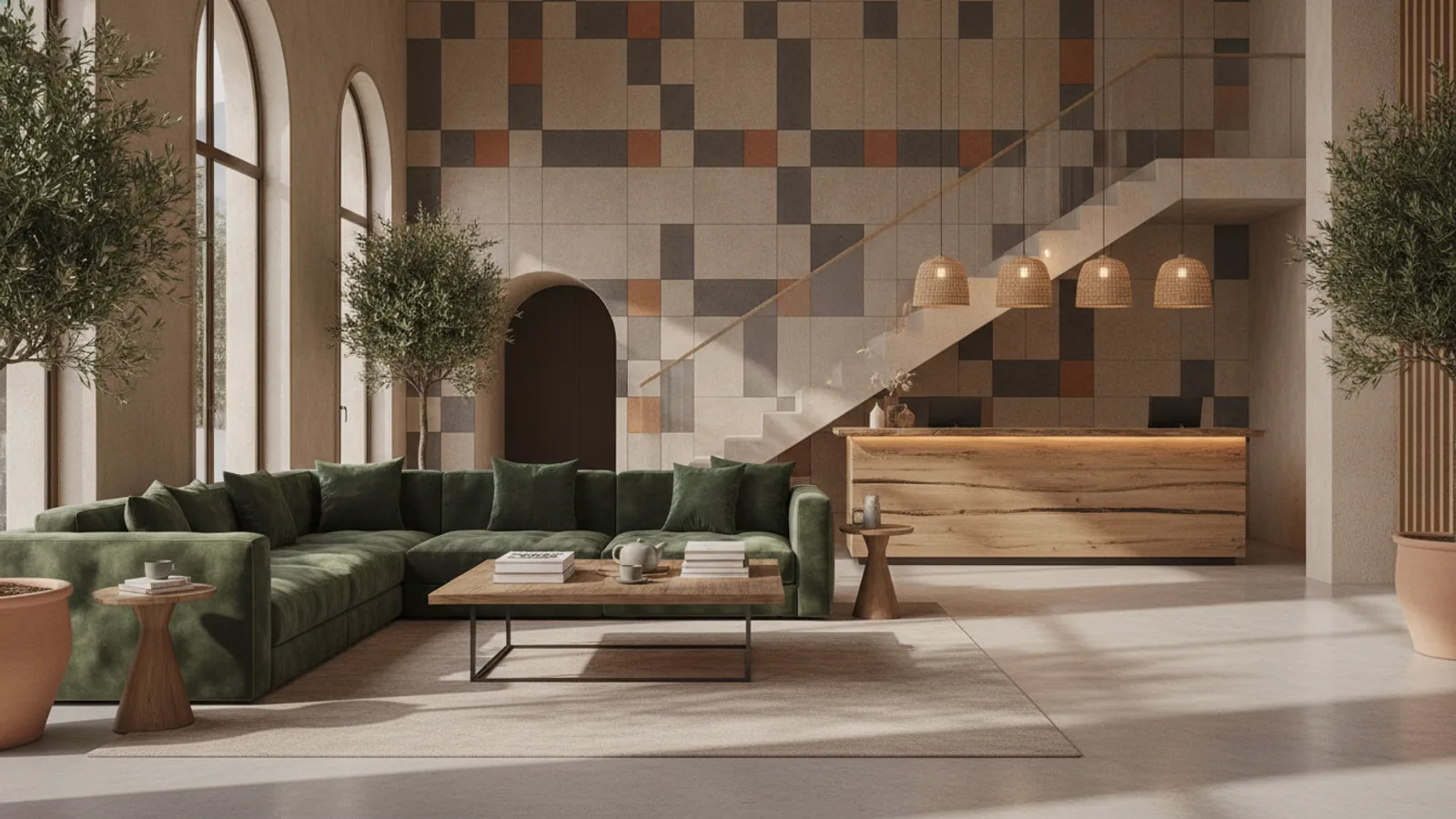
A hero piece could be a dramatic, oversized headboard made from a unique material. It could be a stunning, sculptural light fixture hanging over the bed or seating area. It might also be a vintage, one-of-a-kind piece of furniture like an antique armoire or a brightly coloured velvet sofa. Art can also be the hero; a single, large-scale painting or photograph can have more impact than a gallery of smaller pieces. Choose one hero per room to avoid visual competition and clutter.
Layer Lighting for Mood and Ambience
Lighting is one of the most powerful tools in design, yet it's often overlooked. A single, harsh overhead light can ruin an otherwise beautiful space. A successful boutique design uses multiple layers of light to create mood, provide function, and highlight key features.
Think in three layers:
- Ambient Lighting: This is the overall illumination for the room, usually from ceiling fixtures or wall sconces. Always install dimmers so the guest can control the intensity.
- Task Lighting: This is focused light for specific activities. Examples include bedside reading lamps, a desk lamp, or vanity lighting around the bathroom mirror.
- Accent Lighting: This is used to draw attention to architectural features or decor. Use a small spotlight to highlight a piece of art or uplighting to add drama to a textured wall or a tall plant.
Curate Local and Artisanal Elements
Authenticity is a cornerstone of the boutique experience. One of the best ways to achieve this is by moving away from mass-produced items and incorporating pieces made by local artists and craftspeople. This not only supports the local economy but also grounds your hotel firmly in its location, telling a story that can't be replicated anywhere else.
Visit local art galleries, craft markets, and furniture workshops. Commission a series of photographs of the local area from a nearby photographer. Source ceramic mugs and bathroom accessories from a local potter. Replace generic prints with original paintings or limited-edition prints from artists in the region. These details show a level of care and consideration that guests notice and appreciate. It transforms the hotel from just a place to sleep into a destination that reflects the culture of its surroundings.
Focus on Surprising Details and Textures
Luxury is often found in the small details that people interact with directly. Think about all the "touchpoints" in a room—the things a guest will physically handle. Upgrading these small items can have a huge impact on the perception of quality.
Swap out standard, boring drawer pulls and door handles for unique hardware made of brass, leather, or ceramic. Ensure the bedding is not just stylish but also high-quality, with a high thread count and natural fibres. Invest in heavy, high-quality curtains that block light effectively. Consider adding unexpected textures, like a grasscloth wallpaper inside a wardrobe, a velvet lining in a drawer, or a ribbed glass panel on the bathroom door. These subtle touches combine to create a rich, tactile experience that feels considered and luxurious.
Integrate Technology Seamlessly
A boutique feel doesn't have to mean low-tech. Modern guests expect convenience, but technology should be integrated in a way that doesn't disrupt the design aesthetic. The goal is to make technology helpful but invisible.
Ensure there are plenty of accessible plug sockets and USB ports, especially next to the bed and any desk area. Consider installing them discreetly on the side of nightstands or within custom headboards. Smart speakers, smart TVs, and intuitive smart lighting controls are excellent additions. The key is to hide the clutter. Plan for cable management from the beginning, using conduits in walls or custom-built furniture to conceal wires. The best tech integration is the kind guests find useful without ever having to think about how it works.
Quick Reference
| Situation | Use this | Why |
|---|---|---|
| Creating a sense of luxury | Layered, high-quality textiles (velvet, linen, high thread-count cotton) | Adds tactile richness and a high-end feel that guests can physically experience. |
| Making a small room feel bigger | A large, well-placed mirror and a light, monochromatic colour scheme | The mirror creates an illusion of depth, while a single colour family unifies the space and makes it feel less confined. |
| Adding personality without clutter | A single piece of oversized artwork or a unique statement chair | Creates a strong, confident focal point without needing lots of small, distracting decorative items. |
| Grounding the design in its location | Vintage local maps, commissioned photography of the area, or native plants | Directly connects the guest experience to the destination, adding authenticity and a sense of place. |
Common Problems When You Design a Boutique Space
Even with careful planning, some common issues can arise. Here’s how to spot and fix them.
- The Design Feels Impersonal or Copied: This often happens when relying too heavily on trends from social media. The fix is to return to your core story. Ask yourself: "Does this choice specifically support my unique theme, or did I just see it online?" Swap out one generic element for something local or bespoke to instantly add character.
- The Space is Stylish but Uncomfortable: A beautiful chair is useless if it's painful to sit in. Always test your furniture for ergonomics. Sit in the desk chair, lie on the bed, and check if the bedside table is at a convenient height. Prioritise guest comfort over pure aesthetics. A good night's sleep is more memorable than a stylish-but-impractical headboard.
- The Budget is Spiralling: Unique items can be costly. To regain control, divide your budget into "splurge" and "save" categories. Splurge on the items guests will touch and interact with most—the bed, the shower fixtures, the main seating. Save on elements that are less critical, like decorative objects or the interior fittings of a wardrobe.
- The Final Room Looks Cluttered: It's easy to fall in love with too many beautiful things. The fix is to "edit" the room. Once you think you are finished, try removing one or two items. Does the room breathe better? Negative space—the empty areas in a room—is crucial for creating a calm and sophisticated atmosphere.
Advanced Tips for Boutique Hotel Design
Ready to take your design to the next level? These advanced techniques create truly unforgettable experiences.
- Develop a Signature Scent: Our sense of smell is strongly linked to memory. Work with a perfumer or scent company to create a unique scent for your property. Use it subtly in diffusers in the lobby and hallways, and perhaps as a room spray. It’s a powerful, subliminal way to make your brand memorable.
- Design the "Fifth Wall": The ceiling is often a huge, blank, forgotten surface. Treat it as a fifth wall. Painting it a dark, dramatic colour can make a room feel cosy and intimate. Adding interesting wallpaper, pressed tin tiles, or simple wood moulding can add architectural character and an unexpected layer of detail.
- Create "Instagrammable" Moments: In today's digital world, guests love to share their experiences. Intentionally design one or two specific spots that are perfect for photos. This could be a quirky neon sign with a clever phrase, a beautifully styled reading nook with a unique mural behind it, or a dramatic entryway mirror. This encourages user-generated marketing that feels natural.
- Embrace Biophilic Design: This is the practice of connecting people with nature within a built environment. Incorporate natural elements like a living moss wall, an abundance of healthy indoor plants, and materials like natural wood, stone, and linen. Maximise natural light wherever possible. Biophilic design is proven to reduce stress and improve guest well-being.
Boutique Hotel Design Ideas FAQ
What is the main difference between a boutique hotel and a regular hotel design?
How do I choose a theme that isn't cheesy or gimmicky?
Can I apply these boutique hotel ideas to my own home?
Where can I find unique pieces on a limited budget?
How important is the bathroom in boutique hotel design?
Final Checklist for Boutique Hotel Design Ideas
- Your core story is defined and is evident in the design choices.
- The colour and material palettes are cohesive and support the central theme.
- Each room has a clear focal point or "hero" piece.
- The lighting plan is layered with ambient, task, and accent lights, all on dimmers.
- The design incorporates authentic local or artisanal elements.
- Guest comfort and ergonomics have been tested and prioritised.
- Small details like hardware, switches, and textiles feel high-quality.
- Technology is integrated seamlessly and discreetly.
- The space offers unique, memorable moments that stand out.
- The final design has been "edited" to ensure it feels sophisticated and uncluttered.